

PLENITUDE
Large-scale sustainable protein production

Characteristics
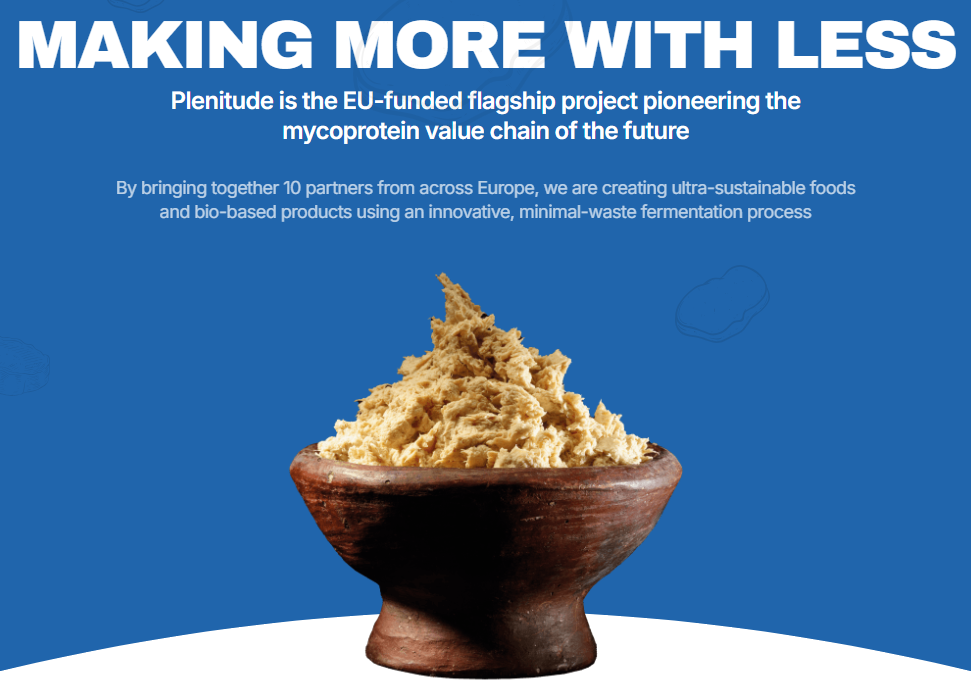
PLENITUDE brought together a consortium of 10 partners from across Europe with the shared objective of developing new bio-based value chains addressing major sustainability challenges. At the core of the project is ABUNDA mycoprotein, a protein-rich ingredient derived from the fungi kingdom with valuable nutritional and functional properties. Throughout the project, partners developed new ABUNDA-based products and explored their applications as sustainable and scalable alternatives to more resource-intensive livestock products. Launched in 2019, PLENITUDE received €16.9 million in funding from the Circular Bio-based Europe Joint Undertaking (CBE JU) and involved leading organisations in agri-food production and processing, biotechnology, product development, academia, life cycle assessment and strategic communication.
Result to be enhanced
Animal-based food production cannot scale to meet current or growing global demands without serious consequences. Other emerging protein technologies show promise but still face significant technical barriers, regulatory hurdles, and consumer acceptance challenges. Mycoprotein has a feed-conversion ratio superior to comparable animal- and plant-based products. ABUNDA mycoprotein, in particular, is produced using well-established and widely available infrastructure, along with low-cost grains as its primary feedstock. Using this technology, mycoprotein can be produced cleanly and efficiently at scale anywhere there is demand for high-quality protein-rich foods and bio-based products.
Why is it important?
Mycoprotein is a nutritional powerhouse. It boasts a complete protein profile, is low in saturated fat, and contains no cholesterol. Mycoprotein is also rich in fibers and is a source of vitamins and minerals, including iron, and calcium. When consumed in place of animal-based foods, mycoprotein could help improve nutritional imbalances associated with modern dietary patterns, supporting digestion, regulating blood sugar, and aiding in weight management. In comparison to meat-based proteins, mycoproteins enable relevant sustainability benefits such as a much lower land use and deforestation, carbon footprint, water use and pollution, as well as a reduced impact on biodiversity.
Project and Acronym: PLENITUDE
Call for application: H2020
Innovation Cluster to contact: Clever
Technologies used: Selection, cultivation, harvest, treatment and processing of mycoprotein
Lead Company: 3F BIO LIMITED
Collaborating companies: FOODCOMPANIONS HOLDING BV, LIFE CYCLE ENGINEERING SPA, STICHTING WAGENINGEN RESEARCH, LACTIPS, MOSA MEAT B.V., VIVERA B.V., ANGLO BEEF PROCESSORS UK, INTERNATIONAL FLAVORS & FRAGRANCES IFF, CARGILL
