

TEXTINOL
Chemical recycling for mixed textile waste
Characteristics
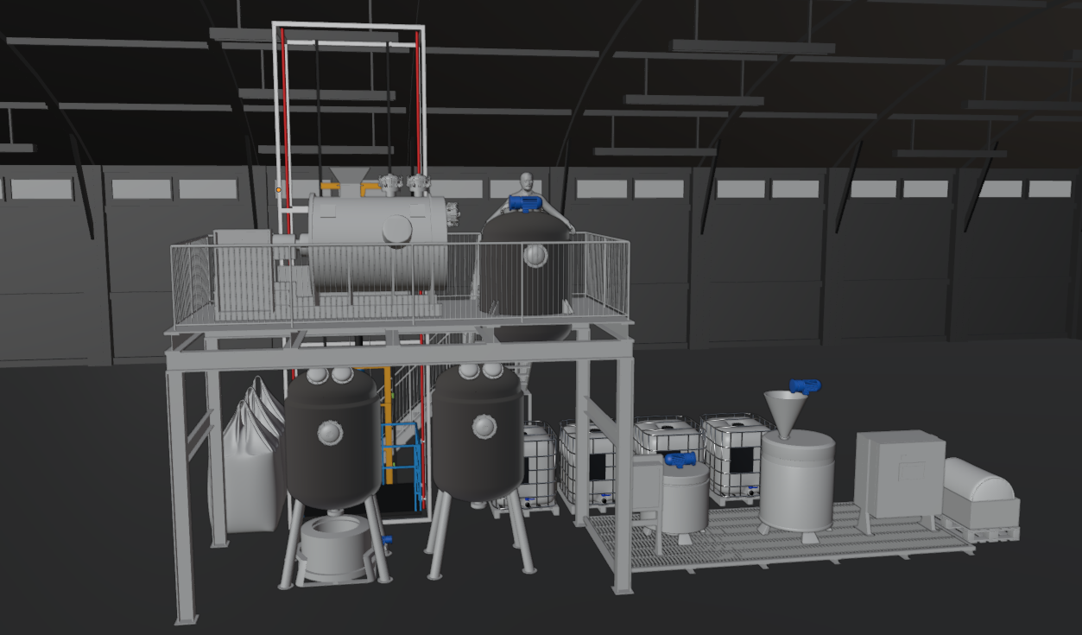
The project involves the pre-industrial development (250 kg/batch) and validation of a technology capable of chemically recycling post-consumer and post-industrial textile waste made of mixed fibers containing cotton—waste that would otherwise be destined for incineration, landfill, or shipment to non-EU countries, as it cannot be reused for second-hand markets, industrial wiping cloths, mechanical recycling, or processed by existing technologies suitable only for pure fibers such as 100% polyester. The chemical recycling process will yield advanced biofuels (for example ethanol or biomethane), as well as building blocks usable in basic chemical applications (such as levulinic acid). The TextInOL technology is protected by a patent , based on laboratory experimental data. Once the results have been validated at the 250 kg/batch scale, it will be possible to design a 5- ton/day industrial plant using reliable data on process efficiency and yield. This will enable monetization of the investment and the commercialization of an integrated package including plant, technology, and related services.
INNOVATIVE ELEMENTS OF THE ENTREPRENEURIAL INITIATIVE
InnoChem intends to install a plant developed as a combination of technologies that until now have only been defined at a theoretical and laboratory level, aimed at recycling post-consumer and post-industrial textile waste that cannot be recycled because they are composed of mixed materials or lack an established chemical recycling technology. The resulting new technology (TextInOL) will make it possible to recover and valorize the individual components to produce new chemical molecules—such as advanced biofuels—in a self-sustaining system, with by-products (digestate) that can be used in the agricultural sector. The TextInOL technology, thanks to its compact design and ease of use—even in environments that are not strictly chemical—allows full integration into existing supply chains, such as textile recovery and recycling facilities (for example, operators handling waste codes CER 20.01.10 and 20.01.11). It can even be potentially installed directly in waste storage areas (landfills), thereby eliminating the environmental impact and transportation costs associated with textile waste. The technological solution will also make it possible to integrate with existing chemical recycling processes that currently handle only “pure” materials, such as 100% polyester or nylon. Another differentiating element of the TextInOL technology is the absence of any severe mechanical pre-treatment steps for the waste.
Result to be enhanced
The resulting process involves using biogas to generate thermal and electrical energy for the company’s own use, or for sale or distribution to renewable energy sources (CER), thereby achieving independence from the traditional grid and reducing operating costs for primary industrial operations. The project is currently being developed with its own capital, and Innochem is available to test materials from textile companies for future integration into their internal waste recovery process.
Why is it important?
Valorization of waste and elecrticity production
Project and Acronym: TEXTINOL
Call for application:
Innovation Cluster to contact: Po.in.tex
Technologies used: Chemical and biochemical technologies
Lead Company: Innochem s.r.l.
